
Contents
The Role of 3D Visualization in Medicine Improving Patient Education with Video Marketing for Pharma and MedTech Best Practices for Medical Video Compliance FAQ15 min read
Medical technologies are becoming ever more complex. Modern pharmaceutical preparations work at the level of cellular receptors. Medical devices integrate with digital systems. New health tech solutions combine biology, engineering, and software. Making such products clear even to medical professionals can sometimes be quite challenging. And explaining them to patients or investors is even more difficult.
It is exactly for this reason that medical animation services have become an important tool in modern medical communication. Animation enables the visualization of the molecular mechanisms of action of medicines, the work of implants within the organism, or complex surgical procedures. Instead of complex descriptions, the viewer sees the process in dynamics. How exactly the technology works and what results it delivers.
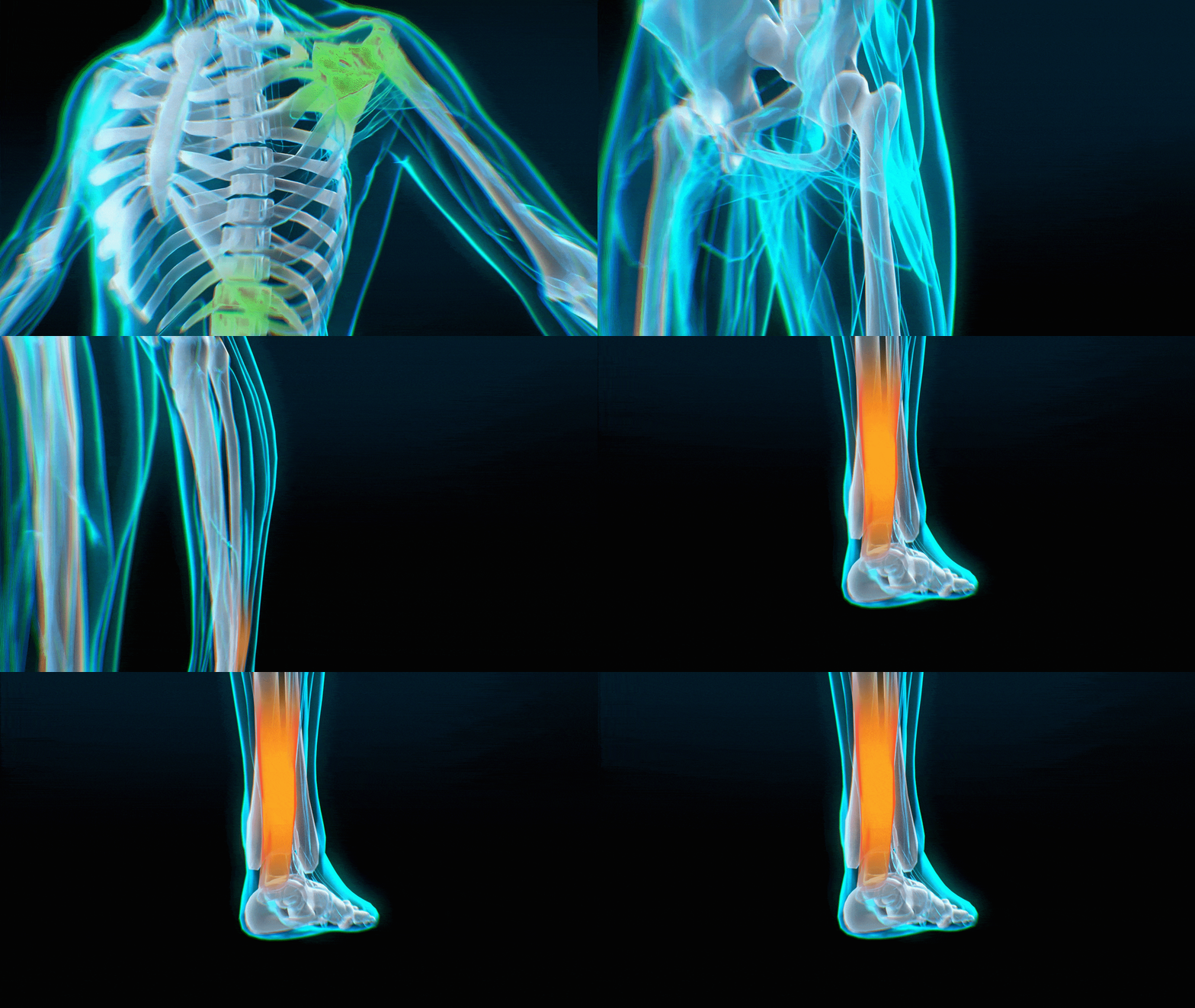
For companies in the field of pharmaceutics and MedTech, this is especially important. New medical products must be understandable for different audiences. Be it doctors, patients, or investors. That’s why animation is actively used in healthcare video marketing, medical conference presentations, and doctor training materials.
In this article, we will discuss how medical animation helps to explain complex medical products, the role that 3D visualization plays in pharmaceutics and MedTech, as well as the practices that help to create accurate medical videos corresponding to the requirements of regulatory compliance.
The Role of 3D Visualization in Medicine
3D visualization has become a standard in modern medical communication. Especially in the pharmaceutical industry and MedTech. Pharmaceutical animation and 3D animation allow the mechanism of action of preparations, implants, and other medical technologies to be shown with significantly greater accuracy than traditional illustrations or video shooting.
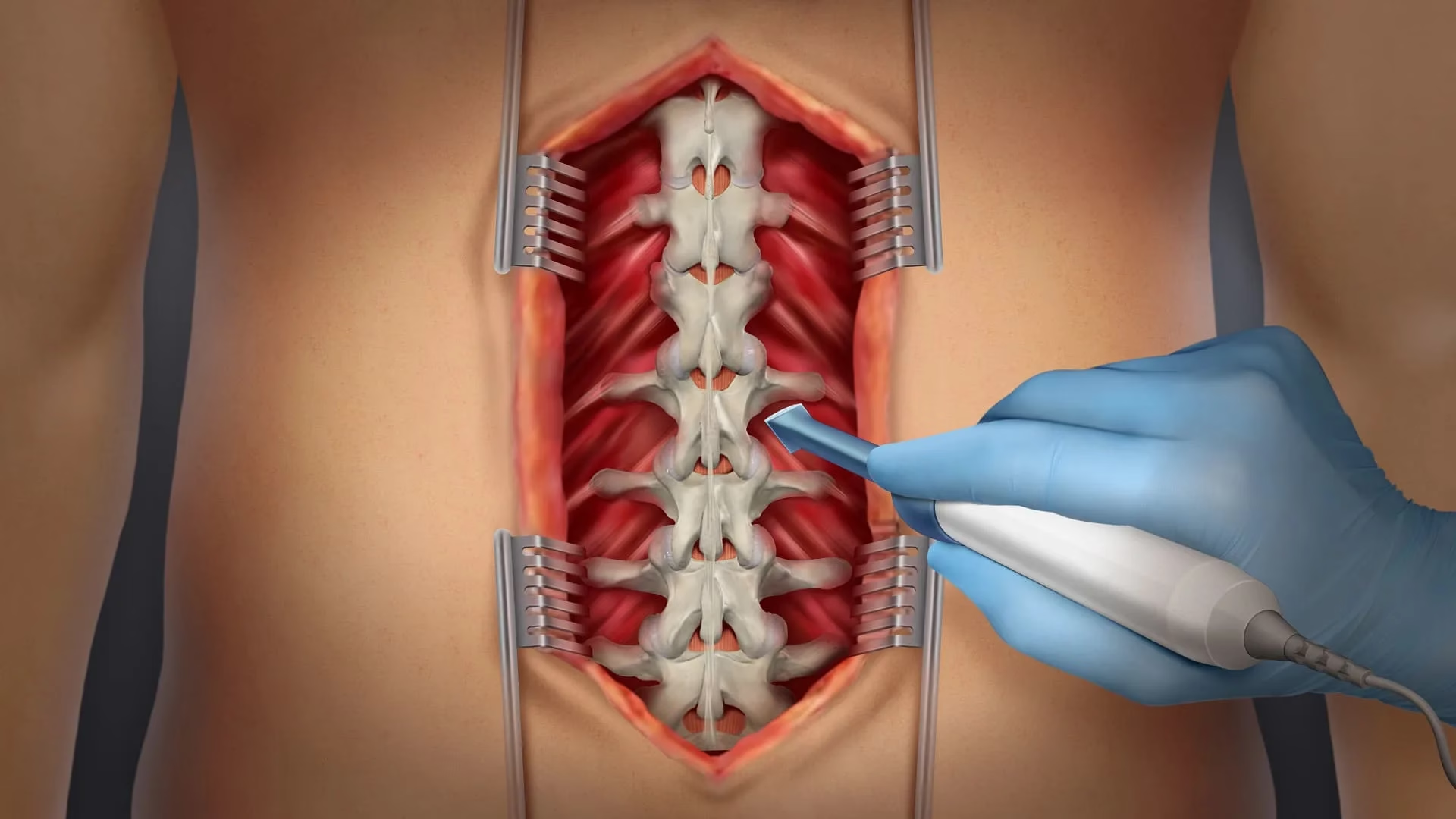
One of the key areas of use of the 3D animation is the demonstration of the mechanism of action of preparations. The so-called mechanism of action (MOA) videos. Such videos show the interaction of the preparation with cells, receptors, or proteins. For example, pharmaceutical presentations often use animation that demonstrates how antibodies or other therapies bind with cellular receptors and block signals that cause a disease. MOA animations allow us to show complex molecular processes. Including the interaction of medicines with cells and signaling pathways of the organism.
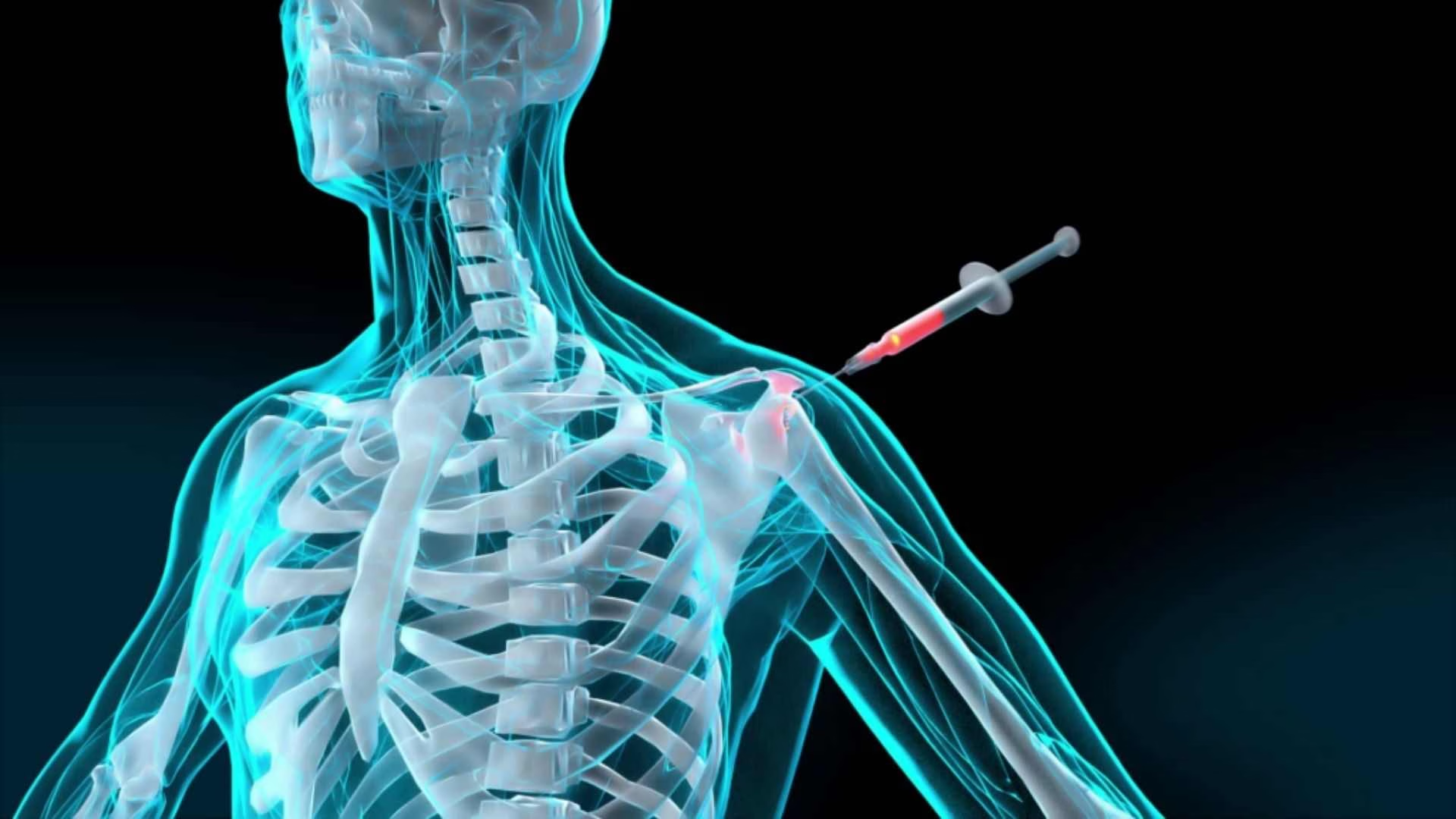
As William Osler noted: “Medicine is a science of uncertainty and an art of probability.”
This thought emphasizes that medical processes are often complex and ambiguous. In order to understand them, we need clear explanations. With that in mind, 3D animation enables the visual demonstration of the mechanisms of action of preparations and the work of medical devices.
Advantages of using 3D animation for medical devices:
Demonstrating the procedures in a complex anatomical environment.
Explaining the work of the mechanisms of medical devices, such as stents, implants, or robotic surgical systems.
Visualizing the interaction of implants with body tissues and demonstrating the key stages of procedures.
Supporting the doctor training, medical conference presentations, and healthcare video marketing materials.
Real 3D animation examples for MedTech companies:
iFuse TORQ TNT™ Implant System (SI-BONE – 2024)
The animated video demonstrates the implant’s installation for stabilization of the pelvic bones, its integration into bone tissue, and its unique porous thread design. It is used as a medical device explainer for surgeon training and presentations on MedTech technologies.
yt_iframe
SI Joint Dysfunction and iFuse TORQ® Implant Animation (Full version, SI-BONE – 2025)
The animation shows stabilization of the sacroiliac joint, the precise positioning of the implant, and the integration into the bone tissue. The animation is used for doctor training and for demonstrating new MedTech solutions.
yt_iframe
Coronary Artery Angioplasty (Nucleus Medical Media – 2021)
Visualizes the procedure of coronary angioplasty. Introduction of a catheter through the radial artery, expansion of the balloon, and installation of the stent. It is widely applied during the training of doctors, conferences, and presentations of new medical technologies.
yt_iframe
For companies that provide medical animation services, the key point is a combination of scientific accuracy and understandable visualization. Animations are created in collaboration with doctors, biologists, and engineers. This enables the accurate reflection of the anatomy, physiological processes, and functioning of medical technologies. That said, 3D visualization has become one of the most effective ways of explaining complex medical products in modern medicine.
Improving Patient Education with Video
Text instructions and static images often do not give a full understanding. Especially when it comes to complex procedures or the interaction of medical devices with the organism. Modern patient education videos are used to visually explain anatomical processes, surgical manipulations, and principles of action of medical technologies.
The famous doctor William Osler once noted: “The good physician treats the disease, the great physician treats the patient who has the disease.”
In modern medicine, this idea acquires new meaning. For the patient to make informed decisions regarding treatment, it is necessary for them to understand how the procedure, medical device, or preparation works. It is exactly for this reason that visual formats have become a critical tool for explaining medical information.
The most common types of videos for patients:
Explanation of diseases and physiology of the organism. A video shows how a certain condition or disease is developing, helps patients understand the causes of symptoms, and the principle of action of the treatment.
Videos about procedures and interventions. Short animations demonstrate each stage of the medical procedure, reduce the anxiety of patients, and contribute to the informed acceptance of the treatment decisions.
Explanation of the work of medical technologies. Visualization of the principle of action of medical devices. From implants to surgical instruments. It increases trust in treatment and contributes to a better understanding.
For example, one of the leading medical centers in Turkey used an animation video to demonstrate the procedure of insertion of a pedicle screw. The video shows the key stages of the operation with the use of intraoperative X-ray. This approach helps patients understand how the intervention proceeds and, at the same time, serves as training material for doctors.
yt_iframe
Marketing for Pharma and MedTech
Actual statistical data about the effectiveness of video in healthcare
| Indicator | Data |
|---|---|
| Information retention | up to 95% in video vs 10% in text |
| Engagement in social networks | up to 48% more views |
| Impact on website traffic | increase up to 300% |
| Preference for video among patients | 72% |
| Use of video before a doctor’s visit | 81% |
Data originates from the open sources in the field of medical marketing and patient education. In particular, Demand Experts and Healthcare Marketing Vitals
In addition to the education of patients and the training of doctors, animation videos play an important role in the marketing communication of pharmaceutical and MedTech companies.
Principal video formats for marketing:
Pharmaceutical animation. Shows the mechanism of action of preparations (MOA), interaction with cellular receptors or proteins.
Medical device explainers. Demonstrate the work of medical devices, implants, stents, and robotic systems.
Procedure demo videos. Explain surgical or diagnostic procedures.
Healthcare video marketing. Integrates animated videos into presentations, websites, social media, and advertising initiatives.
Arginase – deficiency explainer video (Immedica Pharma AB – 2024)
yt_iframe
The video explains a rare disease called ARG1-D. This disease is often confused with cerebral palsy. The animation shows the importance of correct diagnosis and the features of symptoms. It is used in informational campaigns and for the enlightenment of patients.
How Is a Stent Placed During a Heart Attack? Procedure Explained (Biomedstudios – 2026)
yt_iframe
The video shows a procedure of coronary angioplasty (PCI) during a heart attack. It demonstrates the introduction of a catheter, the expansion of a balloon, and the installation of a stent. It is used in the marketing materials of MedTech companies to demonstrate technology to doctors and the general public at conferences.
Advantages of video marketing for pharma and MedTech:
Complex medical concepts are explained quickly and visually.
Increased trust among doctors, patients, and partners.
Easy integration into digital campaigns, social networks, and presentations.
Compatibility with regulatory compliance and scientific accuracy. This makes video a reliable and effective marketing tool.
Best Practices for Medical Video Compliance

The creation of medical videos requires strict adherence to regulatory compliance. This is due to the fact that content influences patients, doctors, and the market in general. The main principles include accuracy, transparency, and compliance with legislation on medical products and advertising.
Key practices for compliance with requirements:
- Scientific accuracy.
All statements about preparations, medical devices, and procedures must be based entirely on verified clinical data and official sources. The use of consultations of doctors, biologists, and scientific experts is mandatory. - Regulatory compliance.
Videos must correspond to the rules of the FDA, EMA, or local health authorities regarding advertising of medicines, MedTech products, and educational materials for patients. - Data protection.
Videos using actual clinical information or footage of patients require anonymization and obtaining of the informed consent. - Clear separation of education and advertising.
Educational videos must provide objective information. They should neither exaggerate the effectiveness nor guarantee the result. Marketing videos for MedTech and pharma must contain disclaimers and accurate instructions. - Content update.
Medical information undergoes quick changes. Videos must be regularly reviewed and updated according to the new clinical data or changes in regulatory requirements. - Use of reliable sources.
All data, graphs, and scientific statements must be confirmed by publications. These include peer-reviewed journals, official protocols, clinical studies, and more.
Adherence to these practices ensures the reliability, safety, and effectiveness of medical videos. It increases the trust of doctors and patients. It also minimizes legal and ethical risks for pharmaceutical and MedTech companies.
Summing up
Medical animation has become an integral tool of modern medicine. It covers the training of doctors, the education of patients, and the marketing of pharmaceutical and MedTech products. The use of 3D visualization and explainer videos allows explaining complex mechanisms of action of preparations. It demonstrates the work of medical devices and surgical procedures in a clear and understandable form.
FAQ
Why use animation in healthcare?
It explains complex processes visually and understandably. It also increases trust among patients and doctors.
How to explain medical devices?
3D animation is used to show the principle of work and the key stages of use.
Is medical animation expensive?
Its value depends on duration, style, and complexity. Investment pays off through effective communication.
How to ensure medical accuracy?
It is ensured through collaboration with physicians and biologists and by checking data against clinical sources.