Contents
Part 2 11. Colonel Sanders 12. Julius Pringles (Mr. P) 13. Quicky Bunny 14. Energizer Bunny 15. Duo Owl 16. Red Bull Bulls 17. Aflac Duck 18. Mr. Monopoly 19. Android Robot (Bugdroid) 20. Freddie the Chimp Conclusion15 min read
Part 2
Today, the role of mascots became even wider. They go beyond limits of television advertising, become heroes of social networks, mobile applications, digital services, and viral content. It is animation that helps make such characters alive and a natural part of interaction with the brand.
In this part, we will look at ten more famous mascots and analyze how they help companies build a strong brand and stay relevant in a modern digital environment.
11. Colonel Sanders
Brand: KFC
Industry: Fast Food
Real Person Who Became a Legend
Unlike the majority of mascots, Colonel Sanders is not a fictional character. This is the founder of KFC, Harland Sanders, who has personally represented the brand in a white suit and with a signature bow-tie for years. His image became so entrenched in culture that even today it remains the main symbol of the company.

Why Does He Inspire Trust?
Colonel Sanders embodies traditions, mastery, and authenticity. He reminds buyers that behind the brand stands a real person with their own history and recipe.
From Historical Figure to Hero of Advertising
Today, KFC actively uses the image of Colonel Sanders in television advertising and digital campaigns. Over the years, his role was performed by dozens of famous actors and comedians. In separate advertising videos, the character was completely animated.
yt_iframe
Lesson for Business: If a company founder has a strong story, they can become a no less powerful brand character than a specially created mascot.
12. Julius Pringles (Mr. P)
Brand: Pringles
Industry: Chips
Minimalism Which Is Recognized Without Words
Julius Pringles, also known as Mr. P, debuted in 1967. Despite his extremely simple design – big mustache, eyes and red bow-tie – he became one of the most recognizable characters on the shelves of shops. In 2020, the brand updated his image and made it even more laconic.

Power of Simple Design
Mr. P conveys friendliness and lightness. He proves that mascot does not need complex details if his image is easy to recognize even from distance.
How Brand Animates Character
Although the majority of people know Mr. P thanks to packaging, Pringles regularly uses him in animated advertising and social networks. Thanks to animation, the character gets emotions and character. It is impossible to convey them by a static logo.
yt_iframe
Lesson for Business: Sometimes it is simple and consistent design that provides the best recognition.
13. Quicky Bunny
Brand: Nesquik
Industry: Drinks and Cocoa
Rabbit Who Embodies Speed
Quicky Bunny appeared in 1973 as a hero of Nesquik advertising. His name comes from English word quick (fast). This successfully highlights the idea of quick preparation of the drink.
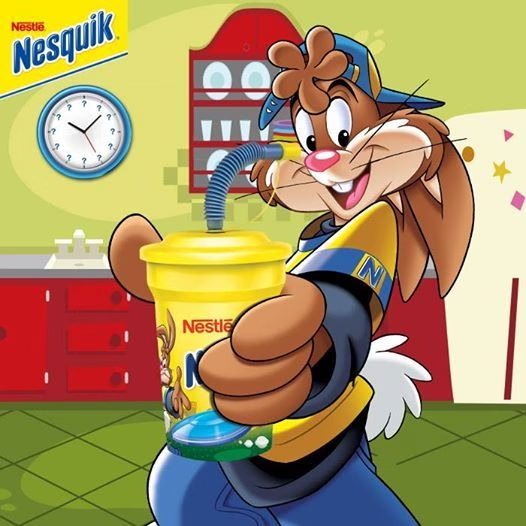
Image Which Children Like
Cheerful and joyful rabbit is associated with energy and carefreeness. That is why he has remained one of the main symbols of the brand in different countries of the world for many decades.
Animation That Adds Character
In commercials, Quicky Bunny is constantly moving, dancing, joking, and interacting with children. Animation helps make the character more alive and maintains a friendly atmosphere.
yt_iframe
Lesson for Business: If the target audience is children or families, a mascot can become an effective way of building an emotional connection with the brand.
14. Energizer Bunny
Brand: Energizer
Industry: Batteries
A Mascot That Does Not Stop Running
Energizer Bunny debuted in 1989 and quickly became one of the most famous advertising characters in the USA. He is constantly stepping forward, playing the drum, demonstrating the main advantage of Energizer batteries – a long operating time.
yt_iframe
More Than an Advertising Image
The persistent pink rabbit symbolizes endurance and constant movement. He is often used as a metaphor for something that never stops, even outside the context of advertising.
When Animation Itself Explains the Product
In most commercials, Energizer Bunny unexpectedly appears in different plots and continues to move, while other characters are already tired. Thanks to this, the viewer instantly understands the main message of the brand without any technical explanations.

Lesson for Business: The best advertising shows the advantages of a product through a story.
15. Duo Owl
Brand: Duolingo
Industry: EdTech
From an Educational Application to an Internet Star
The green owlet Duo appeared together with the launch of the platform in 2011. However, he gained real popularity thanks to social networks. The brand turned the character into a hero of viral videos and short animations.

Why Did Millions Love Him?
Duo combines benevolence with persistence. He simultaneously motivates users not to skip lessons and jokes about their habits. It is this self-irony that made the mascot one of the most successful examples of modern brand marketing.
Animation as the Basis of Communication
Almost the entire image of Duo exists thanks to animation. In TikTok, Instagram, YouTube, and the application itself, the character dances, reacts to user actions, participates in trends, and tells stories. Thanks to this, the mascot stopped being just an application icon and became a full-fledged media persona.
yt_iframe
Lesson for Business: A modern mascot must live in social networks and digital products. It is there that an emotional connection with new generations of users is formed.
16. Red Bull Bulls
Brand: Red Bull
Industry: Energy Drinks
Two Bulls Known by the Whole World
Since the foundation of the brand in 1987, two bulls have become its invariable symbol. They are depicted on the Red Bull logo and for over three decades have been the main characters of the famous commercials with the slogan “Red Bull gives you wings”.

A Symbol of Energy and Strength
The bulls embody endurance and drive. These are precisely the qualities with which the company wants to associate its product. The bulls became one of the key elements of the visual identity of Red Bull and have been invariably used in the advertising campaigns of the brand for many years.
Animation Became the Signature Style of the Brand
For many years, Red Bull has been using short hand-drawn animated clips that are easy to recognize by their characteristic style and humor. It is animation that allows the brand to create absurd and funny situations that are difficult or expensive to realize in traditional filming.
Lesson for Business: Sometimes it is a recognizable style of animation that becomes as important a part of the brand as a logo or a slogan.
17. Aflac Duck
Brand: Aflac
Industry: Insurance
One Simple Idea That Changed the Brand
In 2000, an advertising agency looked for a way to make name Aflac more memorable. It turned out that the word Aflac sounds very similar to quacking of a duck. So was born the Aflac Duck – a character who constantly repeats the name of the company.
yt_iframe
How Duck Helped the Business
Before the appearance of a mascot, many Americans simply did not remember the name of the insurance company. Already after the first advertising campaigns, the brand recognition significantly grew, and the duck became its main symbol.

Why Character Works in Animation
Aflac Duck is actively used in television advertising and digital campaigns. Thanks to his voice and comical behavior, the character helps make complex topic of insurance easy and accessible.
Lesson for Business: Sometimes the most effective solution is born from simple association.
18. Mr. Monopoly
Brand: Monopoly
Industry: Board Games
Character Who Became More Popular Than Game
Mr. Monopoly first appeared in 1930s. Today, he is recognized even by people who never played Monopoly.
yt_iframe
Image That Survived Decades
Top hat, mustache, tailcoat, and cane create an image of a wealthy, but benevolent gentleman. It is him who helps the brand convey the atmosphere of a classic board game.
How Character Goes Beyond Limits of the Box
Mr. Monopoly regularly appears in television advertising, mobile games, animated promo videos, and digital campaigns. Thanks to animation, he became a full-fledged hero.
yt_iframe
Lesson for Business: If a mascot has a strong character, it can become an independent asset of the brand and work far beyond limits of the main product.
19. Android Robot (Bugdroid)
Brand: Android
Industry: Technology
One of the Most Famous Technological Symbols
A green robot Android, also known as Bugdroid, was created in 2007 by designer Irina Blok. His main feature became an open design. The company allowed all interested to freely use and adapt the image of a robot in accordance with the rules of the brand.
yt_iframe
Why He Became Iconic?
A simple silhouette made Android Robot a universal symbol of innovations and accessibility. He is used by millions of developers, manufacturers of devices, and users all over the world.
Animation Adds Character
Although Bugdroid is most often associated with a logo, Google regularly uses him in animated presentations, advertising campaigns, promo videos, and holiday clips. It is exactly animation that helps give the character emotions and make a technological brand more human.
yt_iframe
Lesson for Business: Even a minimalist character can become a powerful element of the brand if it is consistently used in all channels of communication.
20. Freddie the Chimp
Brand: Mailchimp
Industry: SaaS
Mascot Who Made Technological Brand Friendlier
Freddie the Chimp accompanies Mailchimp almost from the moment of the foundation of the company. In the sphere of SaaS, where brands often use restrained corporate style, a cheerful chimpanzee became an unusual and recognizable solution.
yt_iframe
Humanity in Digital Product
Freddie helps make interaction with the service less formal. He accompanies users in the application, appears during successful sending of email campaigns, participates in marketing activities, and creates a feeling of live communication with the brand.
Animation as Part of User Experience
Mailchimp actively uses micro-animations and animated videos with the participation of Freddie. Exactly thanks to his movement and emotions, the character makes even ordinary actions in interface more pleasant and memorable.
Lesson for Business: Mascots can improve user experience in digital products, making brand more human.
Conclusion
If we analyze all twenty examples, it becomes obvious: the most successful mascots were never just logos or decorative elements. They became full-fledged representatives of the brand.
Despite the difference in industries, all these characters have common features. They evoke concrete emotions, have their own character, are consistently used over many years, and are present in various communication channels.
Most importantly, almost all of them long ago went beyond the limits of a packaging or logo. They come to life in advertising videos, animation, social networks, mobile applications, presentations, and digital campaigns.
For business, the main conclusion is simple: the creation of a mascot is a long-term investment in the brand.
That is why the most successful mascots of the world stay relevant regardless of changes in technologies or marketing trends.