
Contents
Why There Is No Universal Animation Style The Most Popular Animation Styles for Business Motion Graphics Character Animation 3D Animation Isometric Animation Whiteboard Animation Kinetic Typography Mixed Media Animation 5 Questions to Ask Before Starting Your Animation Project The Most Common Mistakes When Choosing an Animation Style Conclusion FAQ18 min read
Why can two animated videos with the same budget deliver completely different results?
In most cases, the difference is not the quality of the graphics or the number of visual effects. The deciding factor is often the right animation style.
The importance of this choice is also confirmed by modern marketing trends. According to the HubSpot State of Marketing 2026, 93% of marketers consider video an important part of their marketing strategy, while 37% plan to increase their investment in video marketing over the next year.
However, there is no universal animation style that works equally well for every business. A style that helps a technology startup explain a complex product may be ineffective for a healthcare brand or an educational platform.
In this article, we’ll explore the most popular animation styles for businesses, how they differ, which business goals they suit best, and how to choose the format that will work best for your specific objectives.
Why There Is No Universal Animation Style
“Good design is as little design as possible.” – Dieter Rams
Choosing an animation style is about much more than aesthetics. Research by Gitte Lindgaard and her colleagues found that users form their first impression of a website in approximately 50 milliseconds. This highlights how important the very first visual elements are when audiences interact with digital content.
That is why professional production teams always begin by analyzing the project’s objectives.
Before starting production, it’s worth answering several key questions:
What is the primary goal of the video? Is it to sell a product, explain a service, educate users, or increase brand awareness?
Who is your target audience? A style that attracts younger audiences on social media may not be appropriate for a corporate presentation.
How complex is your product? The more details you need to demonstrate, the more important clarity and visualization become.
Where will the video be published? Videos created for a website, YouTube, LinkedIn, a trade show, or a mobile application may require completely different approaches.
This approach is perfectly reflected in the well-known statement by Steve Jobs:
“Design is not just what it looks like and feels like. Design is how it works.”
These words apply to animation just as much as they do to product design. The animation style should help viewers quickly understand the message while achieving a specific business objective.
The Most Popular Animation Styles for Business
Every animation style has its own strengths. Below are the styles most commonly used by companies in marketing and corporate communications.
Motion Graphics
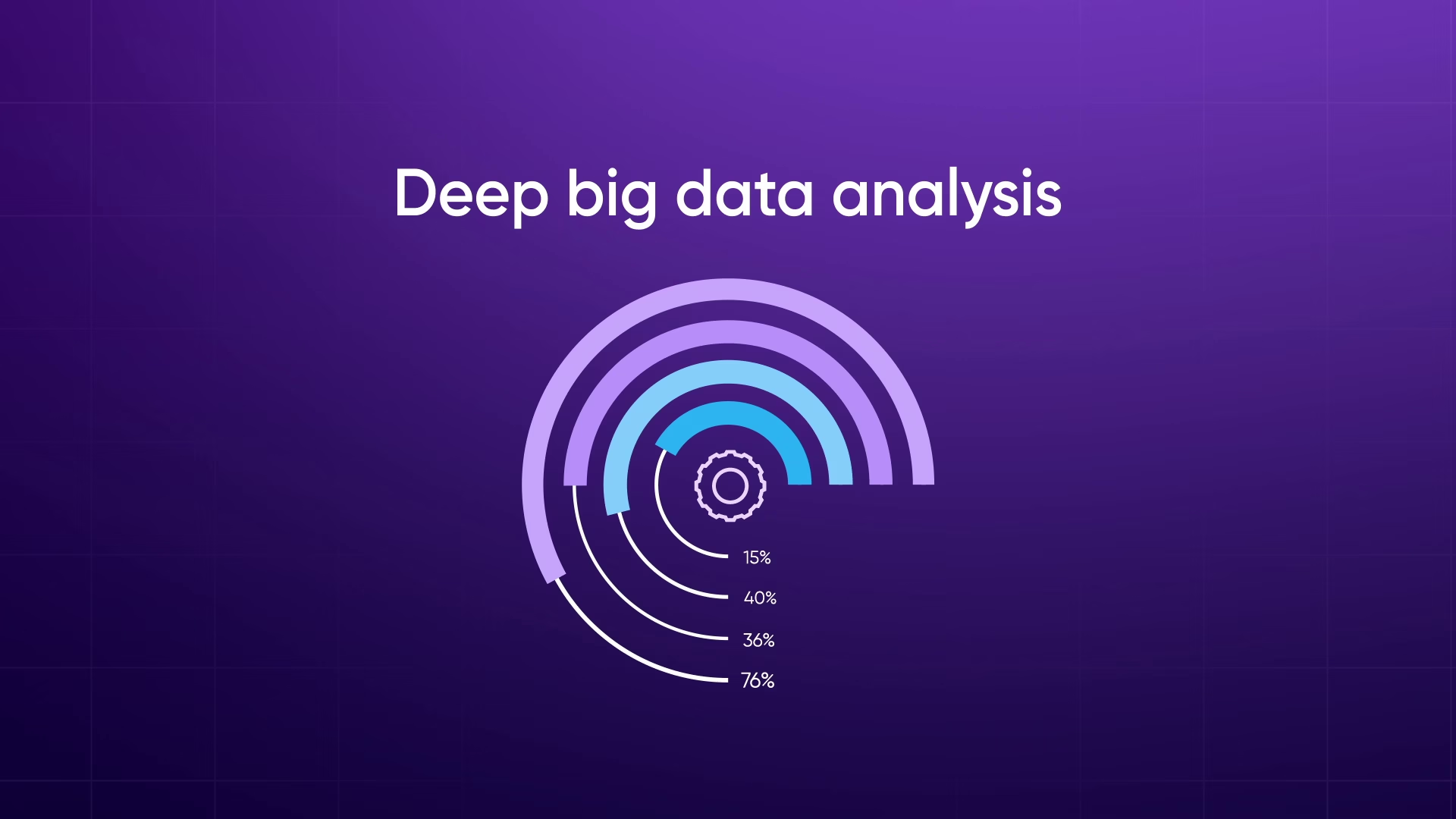
Motion Graphics is the animation of graphic elements such as icons, typography, diagrams, charts, and illustrations.
Best suited for:
Digital product presentations
SaaS and IT companies
Financial services
Corporate presentations
Advantages
- Quickly explains complex information
- Easily combines with infographics and statistics
- Adapts well across different platforms
- Usually requires fewer resources than full character animation or 3D animation
If your video is intended to create a strong emotional response or tell a compelling brand story, Motion Graphics alone may not be enough. In such cases, it is often combined with characters or illustrations.
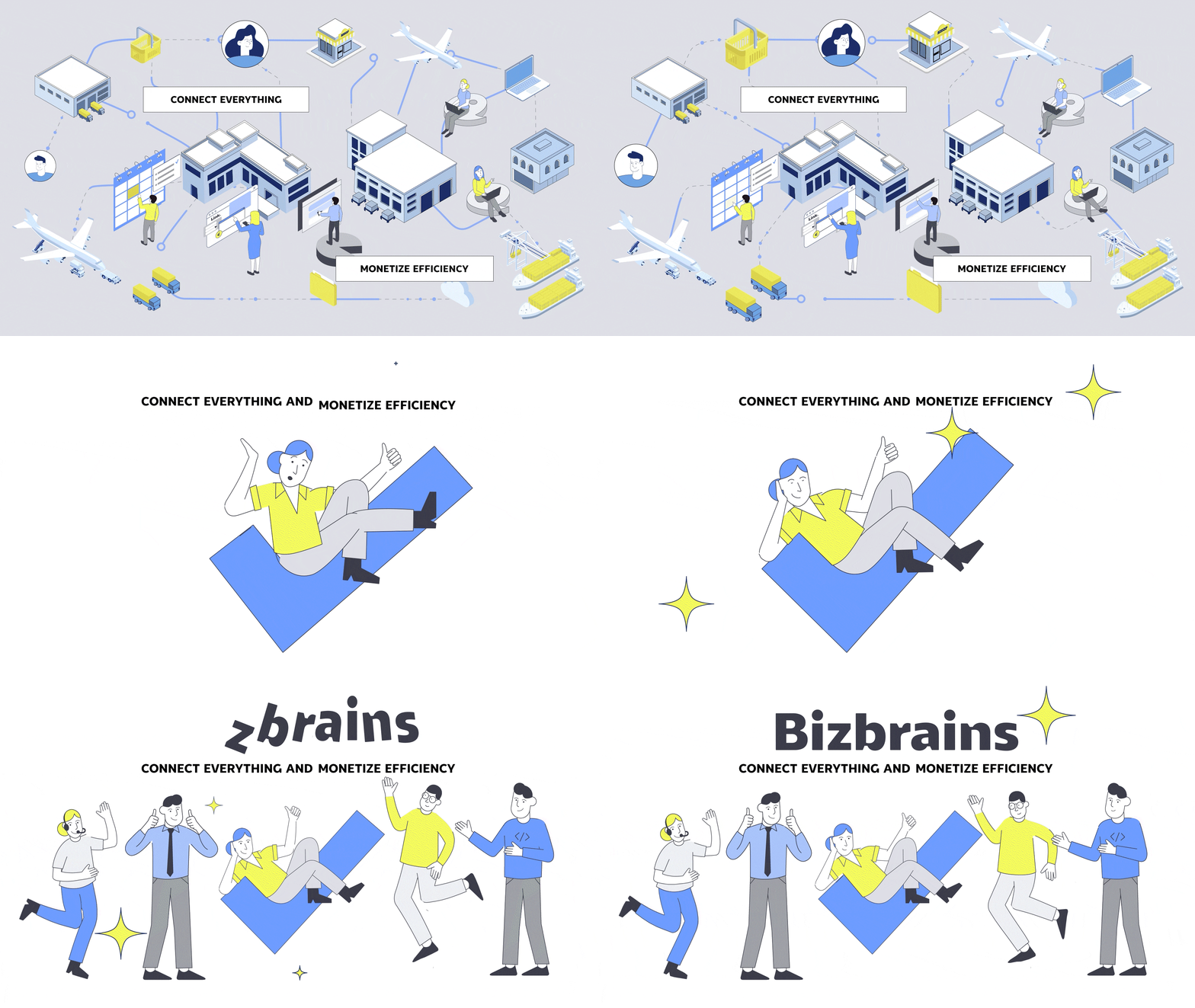
Character Animation
In this style, the focus is on characters, their emotions, and their interaction with a product or brand.

People naturally relate to characters much more easily than to a collection of graphic elements. That is why Character Animation is widely used in advertising campaigns and brand marketing.
Best suited for:
Building brand awareness
Advertising campaigns
Educational platforms
Social impact projects
Advantages
- Creates a strong emotional connection
- Makes a brand feel more human
- Works exceptionally well for storytelling
- Improves video memorability
yt_iframe
3D Animation
3D Animation creates realistic, three-dimensional objects that can be viewed from virtually any angle.

For this reason, it is widely used by manufacturers of consumer electronics, industrial equipment, automotive products, and medical devices.
Best suited for:
New product presentations
Equipment demonstrations
Medical and technological innovations
Premium product commercials
Advantages
- Presents products as realistically as possible
- Demonstrates details that are difficult or impossible to capture with a camera
- Creates a strong premium feel
- Ideal for presenting products before they are physically manufactured
It is important to remember that producing high-quality 3D animation generally requires more time and resources than most 2D animation formats. If the primary purpose of the video is simply to explain how a service works, an advanced 3D visualization may not be the most efficient solution.
yt_iframe
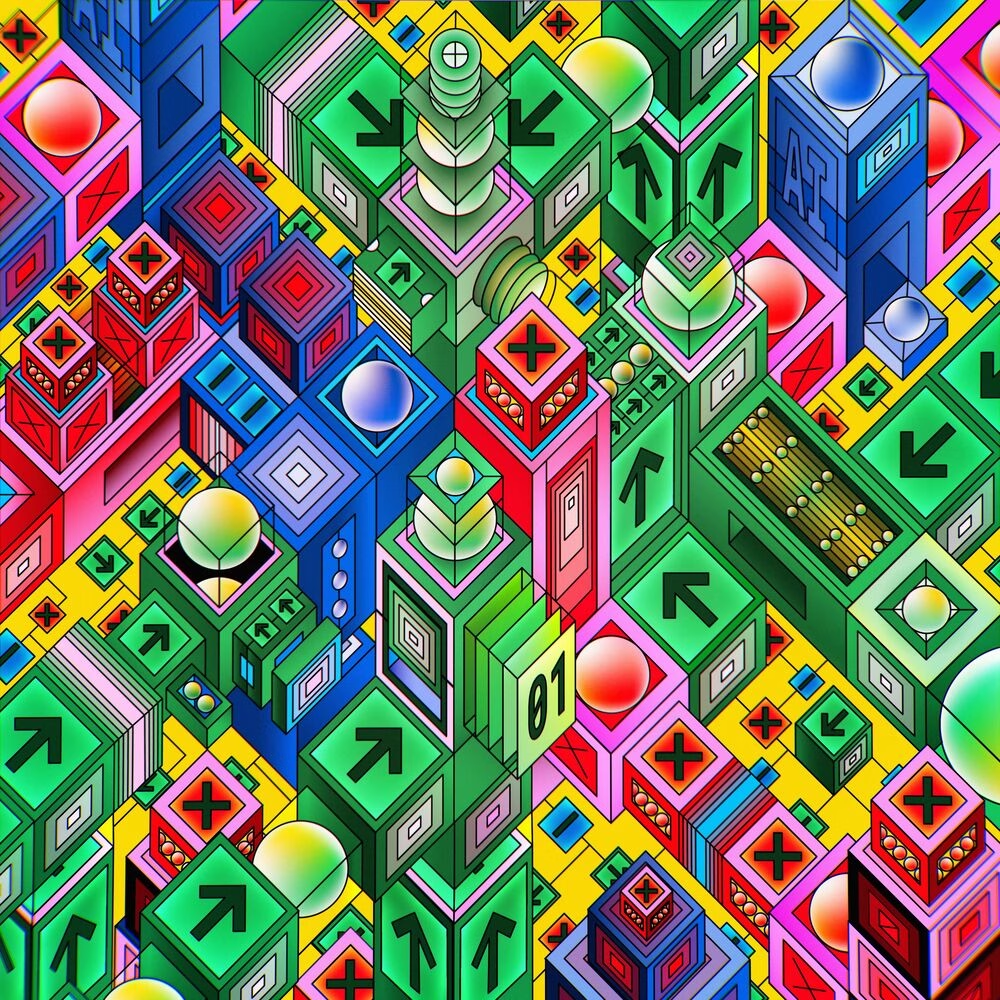
Isometric Animation
Isometric Animation is a style in which objects are displayed from a fixed angle, creating the illusion of three-dimensional space without full 3D modeling.
Best suited for:
SaaS platforms
FinTech
Logistics
Cloud services
Cybersecurity
Business analytics
Advantages
- Clearly visualizes complex processes
- Combines informative content with modern design
- Helps organize large amounts of information
- Scales effectively for presentations and websites
The isometric style is generally less emotional than Character Animation. If your primary goal is to build an emotional connection with your audience, consider combining it with other visual elements or storytelling techniques.
Whiteboard Animation
Whiteboard Animation simulates the process of drawing by hand on a whiteboard. Even today, this format remains highly effective for educational content and explainer videos.
Its greatest advantage is the step-by-step presentation of information. Viewers watch the illustration appear gradually, making it easier to understand new concepts and complex topics.
yt_iframe
Best suited for:
Online courses
Instructional videos
Explaining complex processes
Educational projects
Advantages
- Keeps viewers focused on the main message
- Works especially well for educational content
- Avoids unnecessary visual complexity
- Makes difficult topics easier to understand through simple illustrations
It is worth noting that for advertising campaigns or presentations of modern technology products, Whiteboard Animation may appear too minimalistic. In these situations, Motion Graphics or 3D Animation is often a better choice.
Kinetic Typography
Not every message requires characters or elaborate graphics. Sometimes, the most effective solution is to let the words themselves become the visual focus. This is exactly what Kinetic Typography is designed to do.
yt_iframe
Through motion, scaling, color changes, and rhythm, animated typography helps convey emotion while emphasizing the most important messages.
Best suited for:
Social media advertising
Presenting statistics
Corporate videos
Short promotional videos
Advantages
- Immediately captures attention
- Works effectively even without complex illustrations
- Ideal for videos without voice-over
- Easily adapts to different formats and platforms
Keep in mind that if your message contains a large amount of information or requires a detailed product demonstration, animated text alone may not be enough. In such cases, Kinetic Typography is often combined with Motion Graphics or live-action footage.
Mixed Media Animation
Mixed Media Animation combines multiple visual techniques within a single video, including 2D animation, 3D animation, live-action footage, illustrations, photography, typography, collages, and graphic effects.
This approach makes it possible to vary the pacing of the story while creating a visually dynamic experience. That is why Mixed Media Animation is frequently chosen by brands looking to stand out in an increasingly crowded content landscape.

Best suited for:
Brand videos
New product launches
Brand storytelling
Social media content
Advantages
- Combines the strengths of multiple animation styles
- Creates a dynamic and modern visual experience
- Helps maintain viewer engagement
- Offers greater opportunities for creative experimentation
It is important to remember that combining several techniques requires a clear creative concept. Without a consistent visual direction, a video can quickly become overloaded and lose its overall coherence.
5 Questions to Ask Before Starting Your Animation Project
Answering a few simple questions before production begins can help you avoid unnecessary costs and choose the animation style that best supports your business objectives.
| Question | Why It Matters |
|---|---|
| What is the primary goal of the video? | This determines whether Motion Graphics, 3D Animation, Character Animation, or another style is the best fit. |
| Who is your target audience? | Different audiences perceive visual content and communication styles differently. |
| What do you need to demonstrate? | Complex products often require greater detail, while services usually benefit from simple process visualization. |
| Where will the video be published? | A video created for a website, LinkedIn, or Instagram may require different formats and creative approaches. |
| What are your budget and timeline? | These factors help determine which animation styles are the most practical and effective for your project. |
Tip: There is no animation style that works equally well for every business. The best choice is the one that helps achieve your specific business goals, not simply the one that looks the most modern.
The Most Common Mistakes When Choosing an Animation Style
1. Following Trends Instead of Business Goals. A popular animation style is not always the right choice for your product. What works for a sports brand advertisement may be completely unsuitable for presenting medical equipment or a B2B service.
2. Copying Your Competitors.
A competitor’s video may look impressive, but that doesn’t mean the same animation style will be equally effective for your business.
3. Forgetting About the Target Audience. Videos are created for future customers, not for designers or marketers. If the chosen style does not match your audience’s expectations, even high-quality animation may fail to achieve the desired results.
4. Choosing the Most Expensive Style.
A larger production budget does not automatically guarantee better performance. In many situations, motion graphics explain a product more effectively than an elaborate 3D Animation.
5. Underestimating the Importance of the Script.
Animation enhances an idea – it does not replace it. If the message itself is unclear, even the highest-quality visuals will not make the video effective.
6. Using the Same Style Across Every Platform.
The same video will not necessarily perform equally well on a website, LinkedIn, YouTube, or Instagram. Adapting content for each platform improves both performance and viewer experience.
Conclusion
“The details are not the details. They make the design.” – Charles Eames
The optimal animation style always depends on the video’s objectives, the characteristics of the target audience, and the communication channel. The combination of these factors makes it possible to create animation that serves as an effective business tool, rather than simply an attractive visual element.
Choosing the right style is not about following trends. It is about selecting the visual approach that communicates your message clearly, supports your marketing strategy, and helps your audience understand and remember your brand.
FAQ
Which animation style is best for business?
There is no universal solution. The best animation style depends on your business goals, target audience, product type, and budget.
Which animation style is most commonly used for explainer videos?
Motion Graphics remains the most popular choice because it explains complex information in a clear and engaging way.
Which is better: 2D or 3D animation?
2D Animation is generally better for explaining ideas, storytelling, and educational content, while 3D Animation is more effective for showcasing products, technical details, and realistic visualizations.
Can different animation styles be combined?
Yes. Many modern productions successfully combine multiple animation styles to create more engaging and visually distinctive videos.