
Contents
Hoppers: Pixar’s Unusual Experiment The Amazing Digital Circus: When Internet Animation Moves to the Big Screen Witch Hat Atelier: When Detail Becomes Part of Animation Jujutsu Kaisen Season 3: When Action Becomes the Language of Animation What Is Really Changing in Animation13 min read
The teaser for Toy Story 5 reached 142 million views within its first 24 hours.
But popularity alone is not the only thing worth analyzing. Much more interesting is looking at how modern animation projects use 3D, 2D, lighting, camera movement, and visual style to create new experiences.
We selected several of the most notable animation projects of 2026 and will explore what new ideas they bring to animation and why industry professionals should pay attention to them.
Hoppers: Pixar’s Unusual Experiment
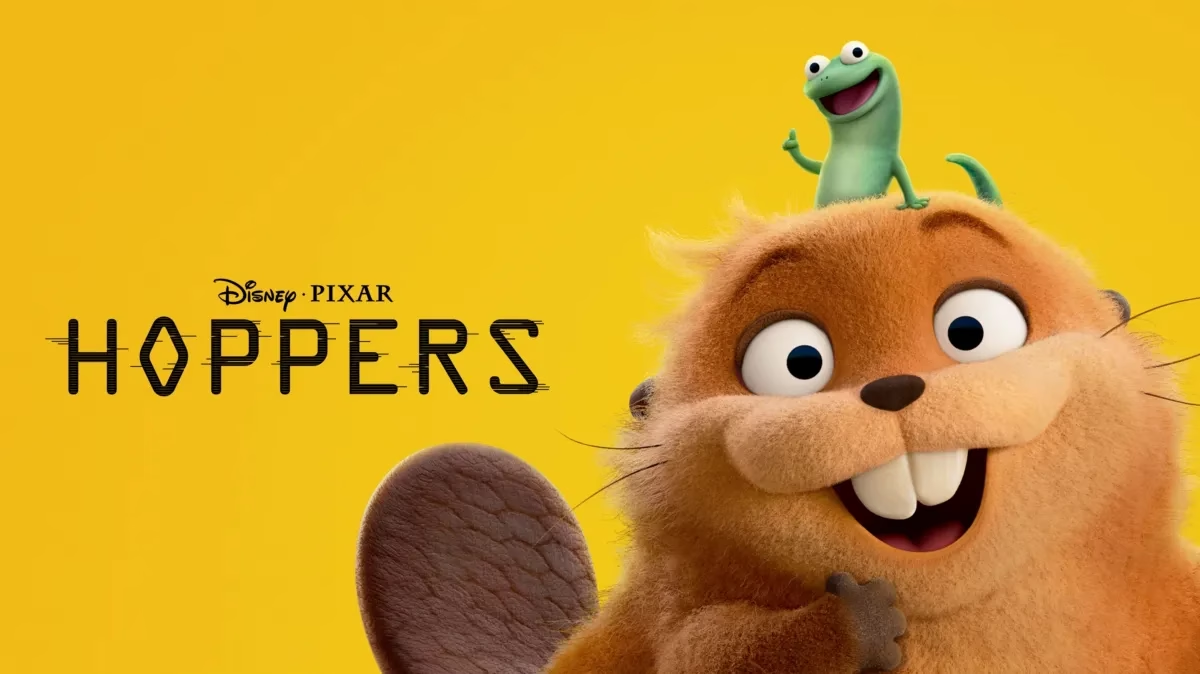
A $150 million budget, approximately $389.7 million in worldwide box office revenue, and a 94% Rotten Tomatoes score. Hoppers demonstrated a very strong performance for an original Pixar feature.
The film was released on March 6, 2026, opening in 4,000 theaters and earning $45.35 million during its first weekend in the United States and Canada.
yt_iframe
For Pixar, this became the studio’s strongest opening for an original, non-sequel film since Coco in 2017. For comparison, Coco earned $50.8 million during its opening weekend, while Hoppers reached $45.35 million.
However, the more interesting aspect is not the box office comparison itself. Hoppers demonstrates how large-scale 3D animation can use advanced technology to achieve a distinctive visual style.
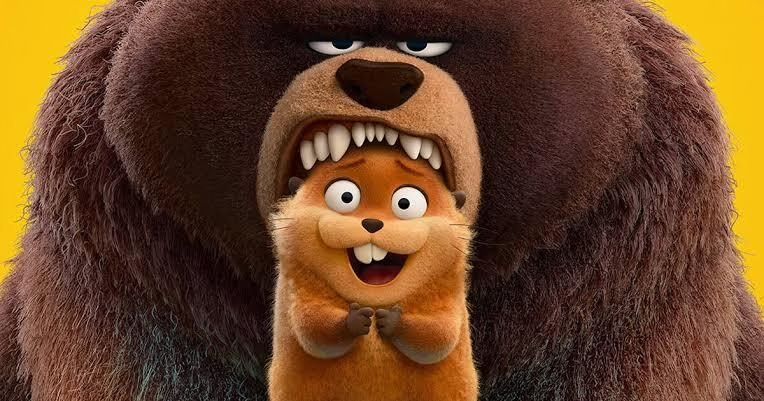
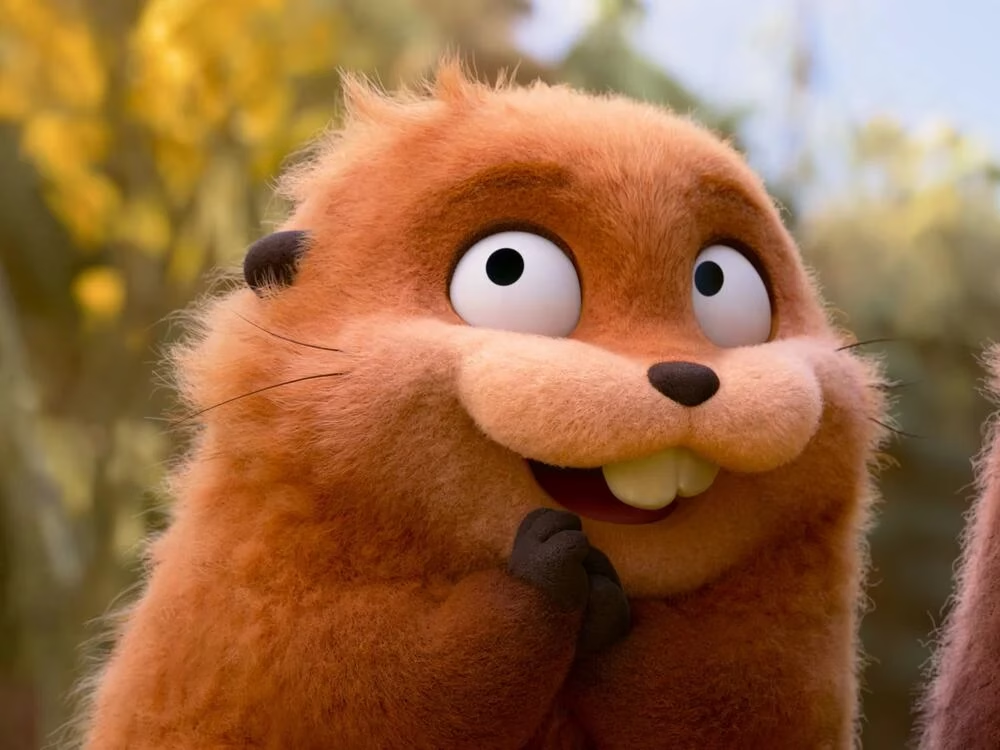
According to the story, the main character Mabel transfers her consciousness into a robotic beaver body, allowing her to communicate with animals. During early development, the robotic animal was originally planned to be an Adélie penguin, but the concept was later changed to a beaver. Research into beaver behavior and their role as “ecosystem engineers” helped shape the world and narrative of the film.
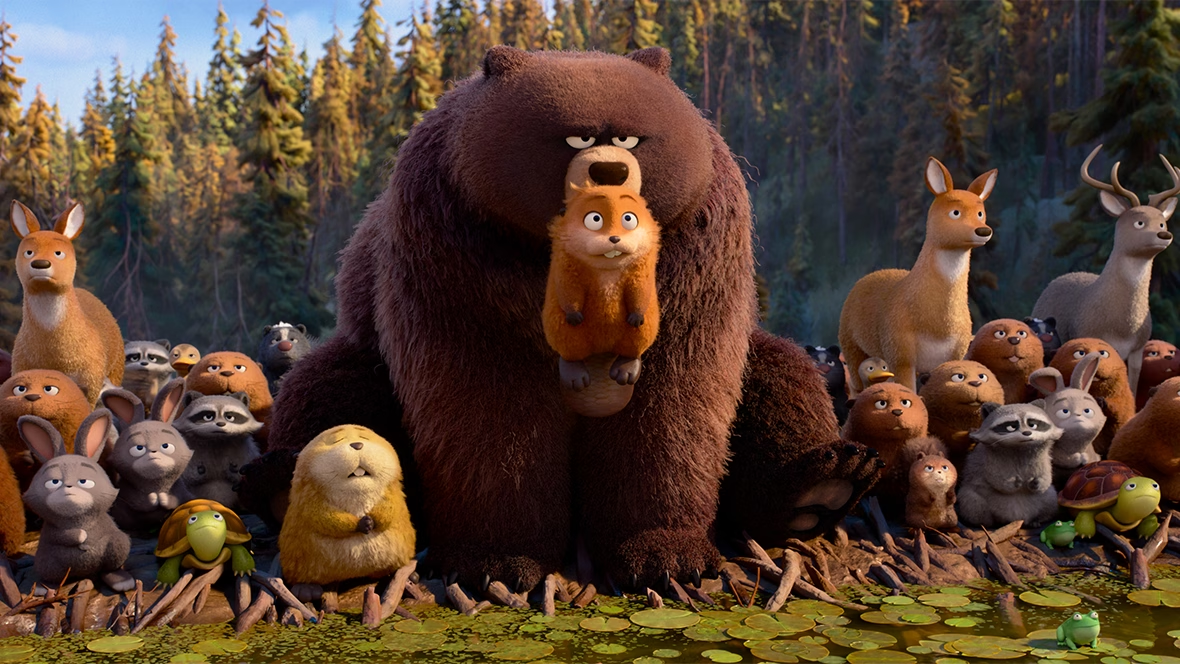
For Pixar’s team, nature became a separate artistic and technical challenge. The enormous amount of detail found in forests, plants, and natural surfaces could easily create an overloaded image. Therefore, the artists intentionally simplified shapes and reduced environmental details while preserving the feeling of a real natural world.
To achieve this, the team developed a new technological pipeline. Lighting and effects artists also created a specialized paintbrush workflow that allowed them to add stylized brush-like elements into the 3D environment and visually simplify certain background elements.
As a result, Hoppers combines organic nature, living animals, a robotic avatar, and stylized 3D animation into a single visual language.
It is a strong example of how a modern high-budget CGI project can use technological complexity not to chase realism, but to create a more expressive artistic style.
The film also received 94% from critics and 93% from audiences on Rotten Tomatoes, making it interesting both as a commercial success and as an example of how major animation studios can still explore unusual visual approaches.
For professionals, the key takeaway is this:
Not every surface needs to be maximally realistic. Sometimes simplification, exaggeration, and intentional stylization can create a much stronger visual impact.
The Amazing Digital Circus: When Internet Animation Moves to the Big Screen
$36.4 million in worldwide box office revenue and more than 1 billion online views.
The Amazing Digital Circus: The Last Act demonstrated that an independent web series can move from YouTube to cinemas and receive a large-scale theatrical release.
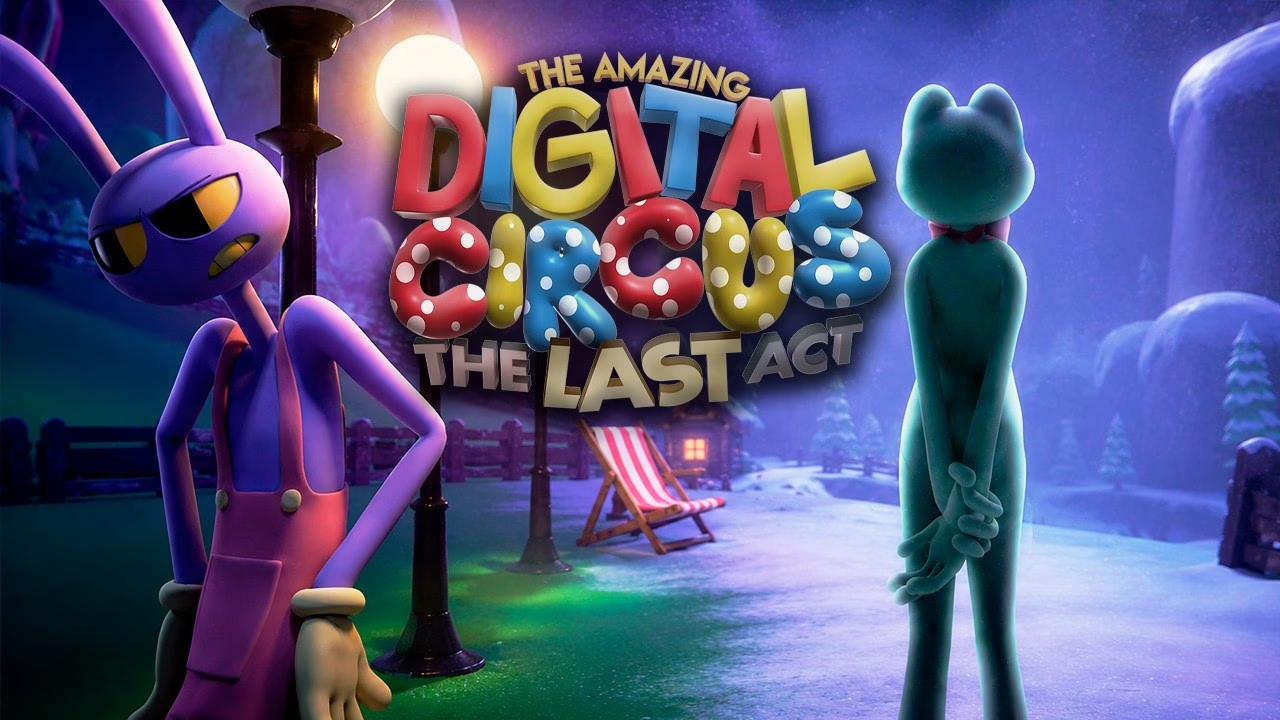
The series was created by the Australian independent studio GLITCH Productions. The creator of the project is Gooseworx.
The Last Act was released in theaters on June 4, 2026. The theatrical version combined the eighth episode of the series with a new one-hour ninth episode, which became the conclusion of the story.
The total runtime of the theatrical release was approximately 1 hour and 33 minutes.
Audience demand directly influenced the scale of the theatrical release. Initially, The Last Act was planned as a limited event screening for only four days, with around 900 cinemas in the United States.
However, after record-breaking demand, the number of theaters in the U.S. increased to more than 2,000 locations. The theatrical run was extended to two weeks, leading up to the finale’s release on YouTube.
yt_iframe
The pre-sale numbers were also remarkable. Before the premiere, ticket sales had already exceeded $7.5 million in the United States.
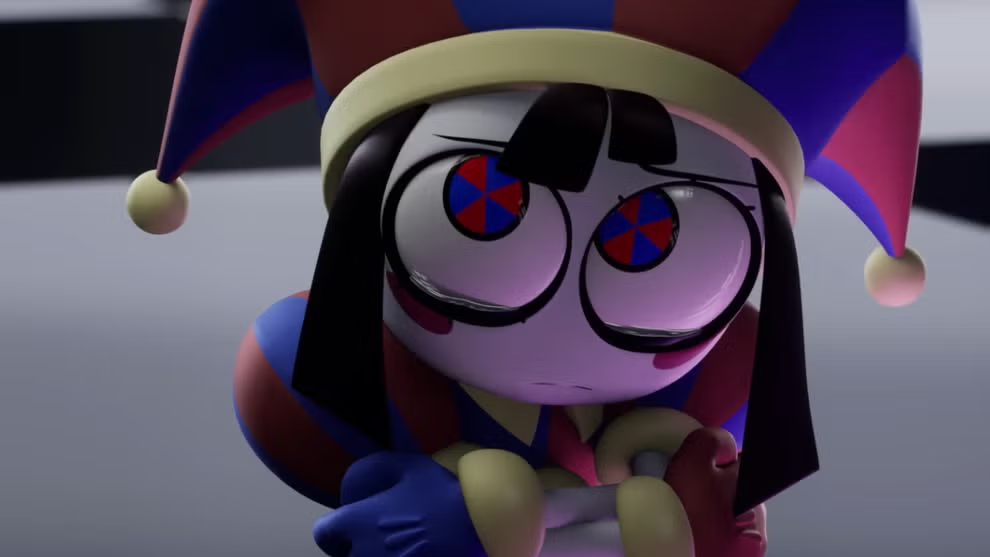
Visually, The Amazing Digital Circus follows a completely different logic from traditional studio animation. It is 3D animation built around stylized characters, exaggerated forms, and an artificial digital environment.
The unnatural, artificial quality of the world itself becomes part of the artistic direction.
For professionals, the most important shift here is the change in the production model.
An animated project no longer has to begin with a traditional studio pipeline. It can first build an audience online and only later move to the big screen.
The Amazing Digital Circus demonstrates that for this type of transition, the key factors can be a strong visual identity and an already established community of viewers.
Witch Hat Atelier: When Detail Becomes Part of Animation
100% on Rotten Tomatoes and an 8.4/10 rating on IMDb.
Witch Hat Atelier became one of the most notable 2D anime projects of 2026. The series premiered on April 6, 2026, and was produced by the Japanese animation studio BUG FILMS.
yt_iframe
For an adaptation, this was a challenging source material.
The original manga by Kamome Shirahama is known for its incredibly detailed illustrations. Therefore, one of the biggest challenges for the animation team was determining which details needed to remain and which could be simplified for movement.
Director Ayumu Watanabe explained that production took approximately three times longer than a typical television anime series.
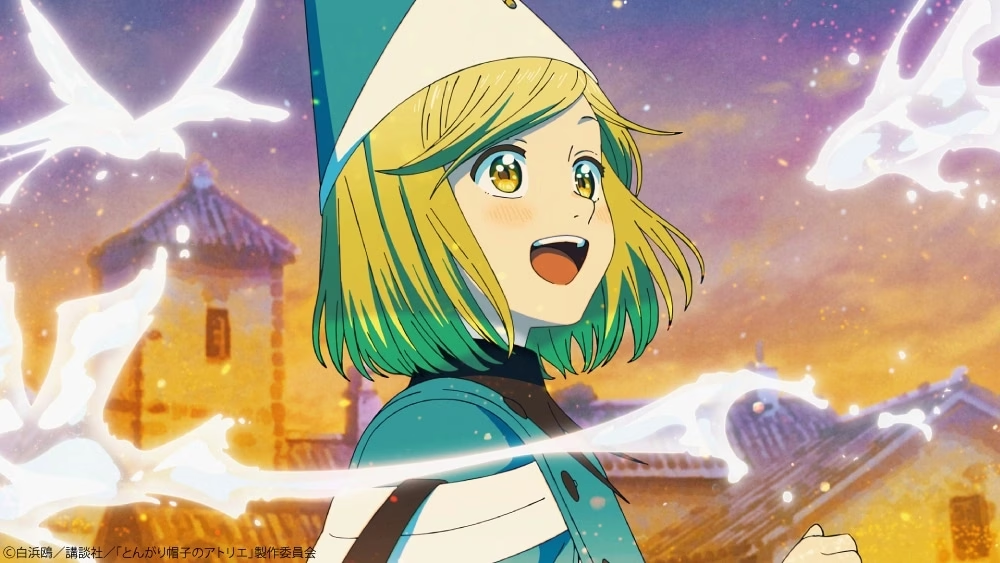
The team had to carefully explore how to translate the complexity of the original artwork into animation while avoiding overwhelming the viewer with too much visual information.
This challenge also applied to character design. The adaptation team reviewed the number of details in costumes and character appearances. In some scenes, they even restored additional details when those elements worked better specifically in motion.
As a result, Witch Hat Atelier is interesting not only because of its beautiful visuals. It is an example of how detail itself can become part of cinematic storytelling.
Perspective, camera movement, composition, and animation transform a static illustration into a fully developed animated scene.
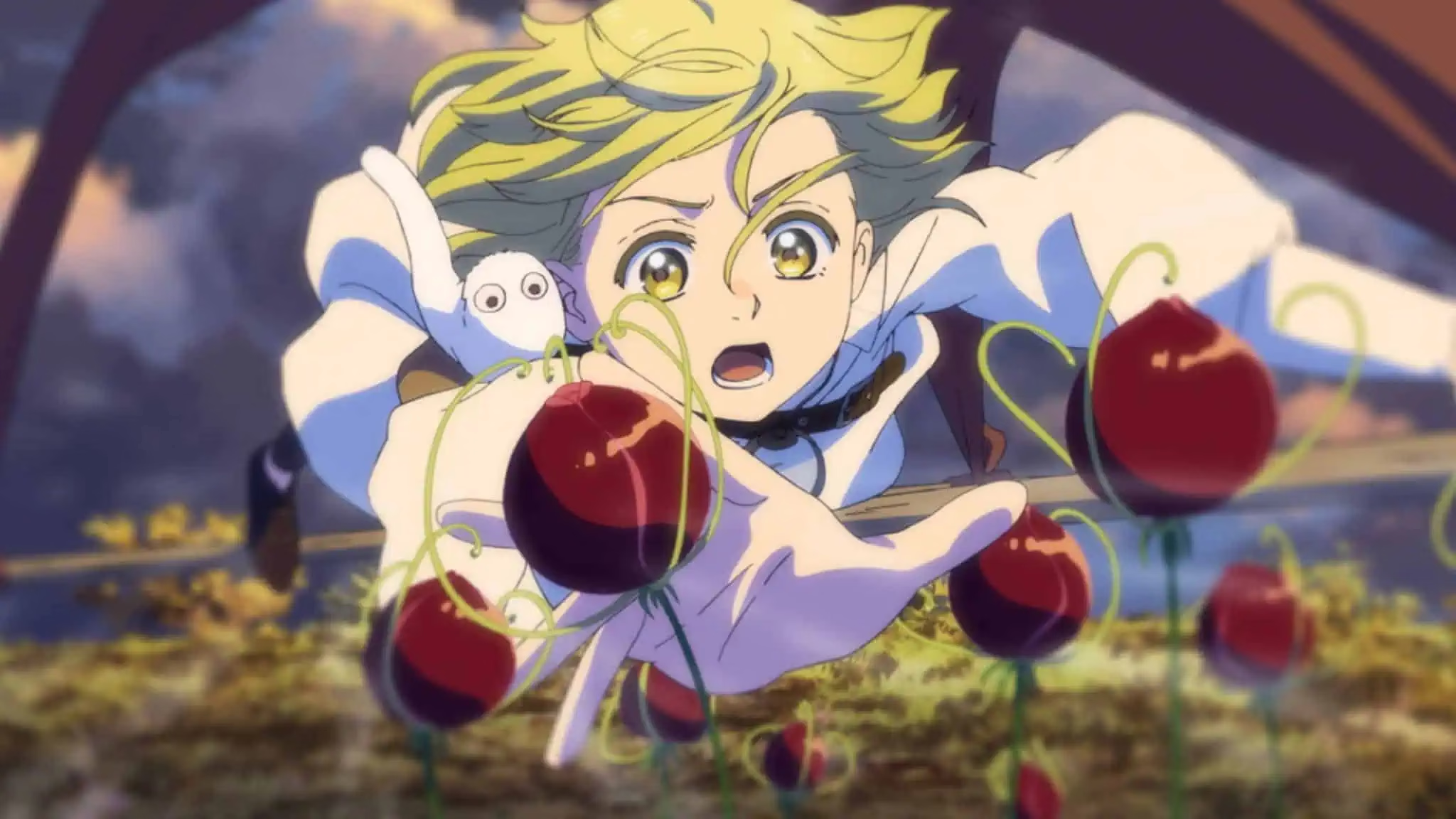
For professionals, this creates an interesting contrast with Hoppers.
Pixar simplified natural environments to control visual complexity in a demanding CG world.
Witch Hat Atelier, on the other hand, embraces a high density of hand-drawn details. The main challenge becomes deciding what information should survive once the image begins moving.
Modern 2D animation does not necessarily mean a simpler visual approach. Sometimes the biggest challenge is understanding what elements are truly necessary to transform a static illustration into a living cinematic frame.
Jujutsu Kaisen Season 3: When Action Becomes the Language of Animation
12 episodes and a 9.8/10 rating for its highest-rated episode on IMDb.
The third season of Jujutsu Kaisen became one of the most notable anime releases of 2026.
The season premiered on January 8, 2026, with production handled by the animation studio MAPPA.
This season adapted the Culling Game arc, with Shota Goshozono returning as director.
The production team also included returning key members such as screenwriter Hiroshi Seko, character designers Yosuke Yajima and Hiromi Niwa, and composer Yoshimasa Terui.
But the main reason this season deserves attention is the way MAPPA approaches action animation.

The fights are often built as continuous movement sequences, with constantly changing camera angles, perspectives, and scale.
What is also interesting is that the team does not attempt to make every season visually identical.
Jujutsu Kaisen continues to evolve its visual language while maintaining the recognizable style of Gege Akutami’s manga. Each season adapts that foundation through different directing choices and approaches to movement.

Camera movement, perspective, editing rhythm, and changes in shot scale become part of the choreography itself.
The viewer is not simply watching a fight. They are constantly being moved through the scene and experiencing the action from within.
yt_iframe
For professionals, this creates an interesting contrast with Witch Hat Atelier.
There, the main challenge is transforming a highly detailed static drawing into a living animated frame.
Jujutsu Kaisen demonstrates the opposite approach: how to use movement, camera language, and rhythm so that dynamics themselves become the main storytelling tool.
When camera, movement, and composition work as one system, the choreography of a scene can become part of the language of animation itself.
What Is Really Changing in Animation
When we look at these four projects together, one thing becomes clear:
Animation is no longer moving according to the rule “the more complex, the better.”
Hoppers intentionally simplifies its 3D environment.
Witch Hat Atelier transforms an abundance of details into a storytelling tool.
Jujutsu Kaisen turns movement itself into part of the narrative language.
And The Amazing Digital Circus proves that animation created for YouTube can eventually reach the big screen.
The most interesting modern projects are not necessarily the ones with the most advanced technology.
Their strength comes from finding a unique way to use available tools, or even consciously choosing not to use them.
That is why in 2026 it is worth paying attention not only to how animation looks, but also to what creative decision stands behind the visual style.
Technology is becoming more accessible, but the most memorable projects are still defined by artistic choices.
The future of animation is not only about creating more realistic worlds. It is about discovering new ways to tell stories through movement, design, and visual language.