
Contents
3D Characters as the Stars of Advertising What is interesting here from a 3D perspective: 3D as a Way to Make a Product Impossible What is interesting here from a 3D perspective: 3D as a Way to Showcase a Product of the Future What is interesting here: 3D as Part of Hybrid Production What is interesting here from a 3D perspective: Conclusion11 min read
$31.49 billion
That’s the estimated value of the global 3D animation market in 2026, according to Mordor Intelligence.
And that’s particularly interesting against the backdrop of the AI video boom. Generative tools are rapidly changing the way videos are created, but this does not mean that 3D is losing its role.
Modern 3D animation has long moved beyond animated films and complex CGI scenes. It can be an advertising character, a way to showcase a product, a tool for creating impossible worlds, or a key element of hybrid production.
“It’s got to be about the story. It’s not the technology just as it’s not the pencils you use that make it entertaining; it’s what you do with those things.”
– John Lasseter
Let’s take a look at several projects from 2026 to understand how 3D is being used in branded video today.
3D Characters as the Stars of Advertising
3D has long allowed brands to create characters that would be difficult to reproduce through traditional filming. But there is something even more interesting.
These characters can be placed into completely different situations while maintaining their recognizable identity.
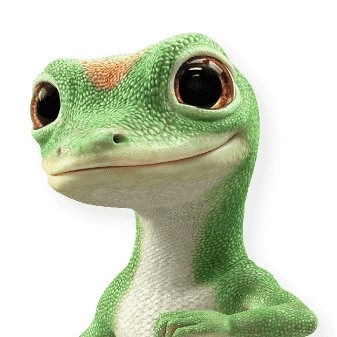
A great example is GEICO Gecko in the commercial “Dive”, created with the help of the VFX team at Framestore in 2026. The spot continues Framestore’s long-term collaboration with GEICO and The Martin Agency.
yt_iframe
What is interesting here from a 3D perspective:
The character remains recognizable, even though the environment and situations around it constantly change.
3D provides full control over movement, facial expressions, camera angles, lighting, and interaction with the environment.
The Gecko can be integrated into scenes together with live actors and real-world locations.
3D allows brands to develop one character across multiple advertising stories.
In “Dive”, Gecko finds himself in an unusual situation. Wearing diving equipment, he explores a bathroom drain.
The contrast between an ordinary household environment and a CG character creates a large part of the commercial’s humor.
System1 named this commercial Ad of the Week, highlighting Gecko’s flexibility as a recognizable brand character.
In modern advertising, a 3D character is not just a visual element. It is a flexible storytelling tool that can be adapted to different narratives and product messages.
3D as a Way to Make a Product Impossible
Sometimes a product does not need a completely new shape. Sometimes it is enough to show it in a way that would be impossible in the real world.
In the Chupa Chups “Impossible” campaign, an ordinary lollipop is presented almost like a component of a spacecraft.
The video reveals its structure layer by layer: carbon composite, aramid fibre, silicon carbide, and liquid rubber.
It is a serious engineering presentation for an ordinary lollipop. And that is exactly where the humor comes from.
What is interesting here from a 3D perspective:
The product becomes the main character.
CGI allows brands to present an everyday object as a complex technical structure.
A familiar shape can be exaggerated and presented through the visual language of engineering and product visualization videos.
The contrast between a serious technical presentation and an ordinary lollipop creates a strong comedic effect.
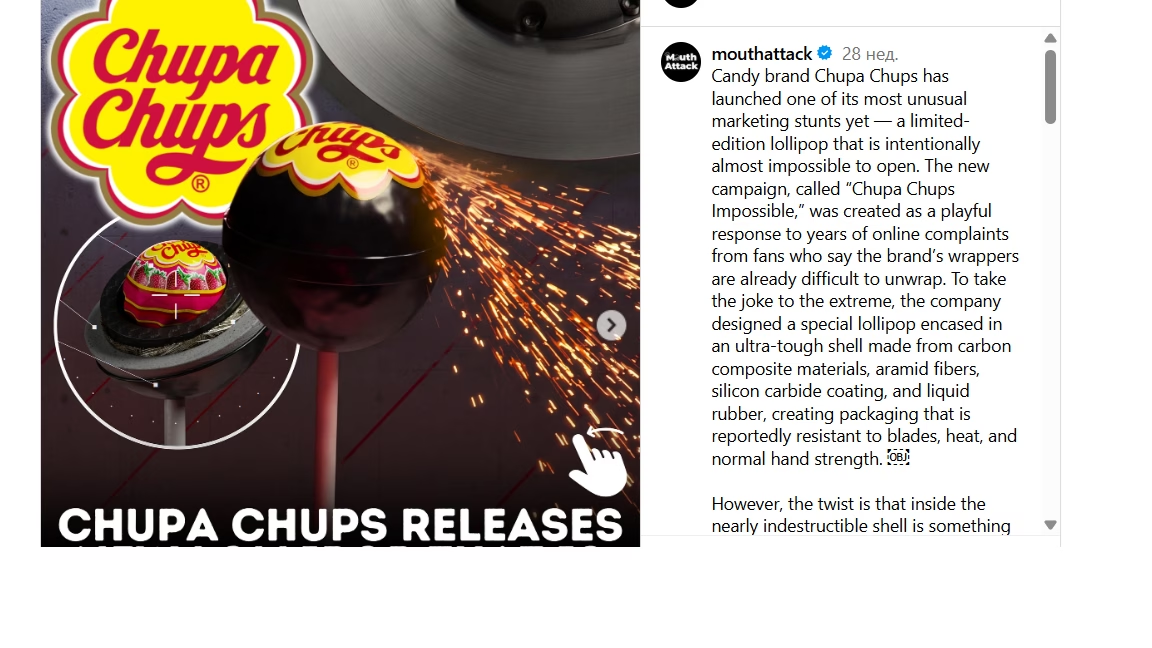
Chupa Chups actually created 250 of these lollipops. They were placed inside protective shells made from carbon composite, aramid fibre, silicon carbide, and liquid rubber.
According to the campaign, the structure could withstand more than 1,000 kg of compression force before cracks appeared.
Inside the structure was the exact thing the brand wanted to introduce: a new packaging design that is easier to open.
The 250 limited-edition pieces were sent to creators around the world, inviting them to try opening them.
This case demonstrates another possibility of modern 3D animation: creating a visual story around a product that exaggerates its characteristics and transforms an ordinary object into something completely unexpected.
3D as a Way to Showcase a Product of the Future
There is another important role for 3D: showing products that audiences cannot experience in real life yet.
This is exactly how the presentation video for Meta VR Glasses, introduced on September 23, 2026, works.
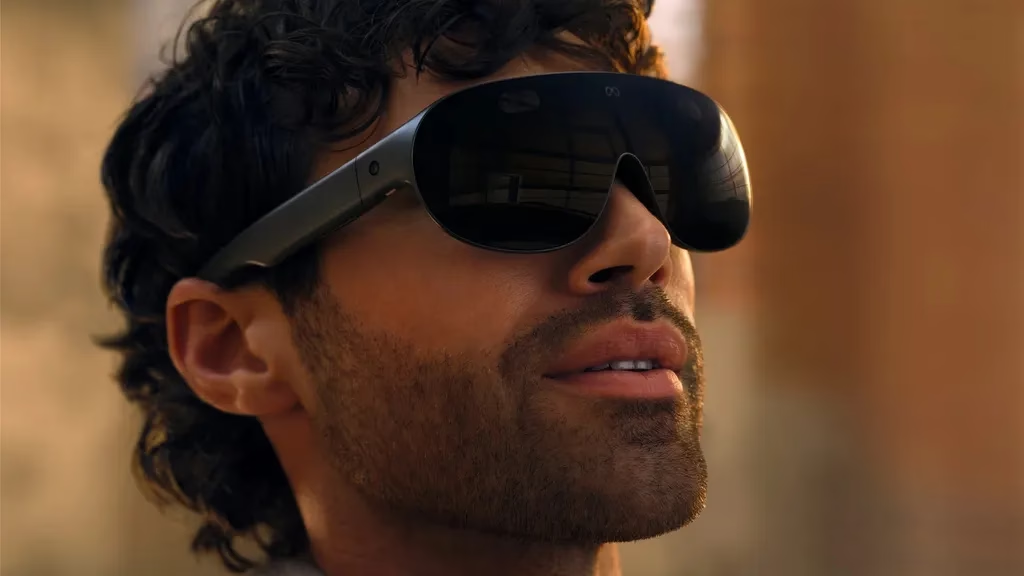
The glasses themselves are expected to launch only in spring 2027, so the video focuses largely on demonstrating what the user experience could look like.
yt_iframe
In the video, the glasses transform everyday situations into large-scale digital experiences: a cinema appears directly in front of the user, a workspace expands across multiple virtual screens, and a sports broadcast creates the feeling of being next to the field.
3D becomes a way to explain a product that does not physically exist on the market yet by showing the experience it is designed to deliver.
What is interesting here:
3D visualization allows brands to demonstrate future user experiences before a product reaches the market.
Digital objects can be scaled, transformed, and redesigned without the limitations of traditional filming.
A single product can be presented across multiple usage scenarios within one video.
The physical product remains the center of attention, while digital environments can be created around it without physical limitations.
3D as Part of Hybrid Production
“We always felt like the ultimate success is actually when the technology is not the issue. We’ve always felt that way.”
– Ed Catmull
Modern 3D animation can work alongside puppetry, physical sets, traditional animation, and AI.
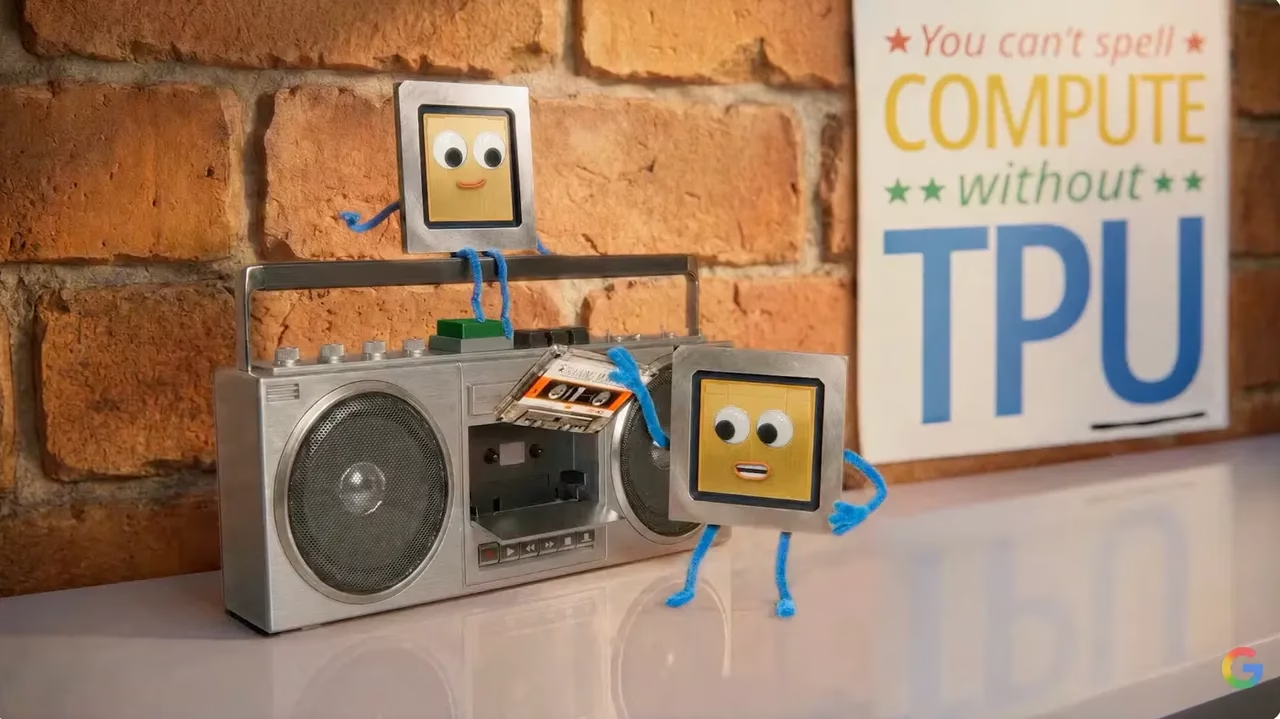
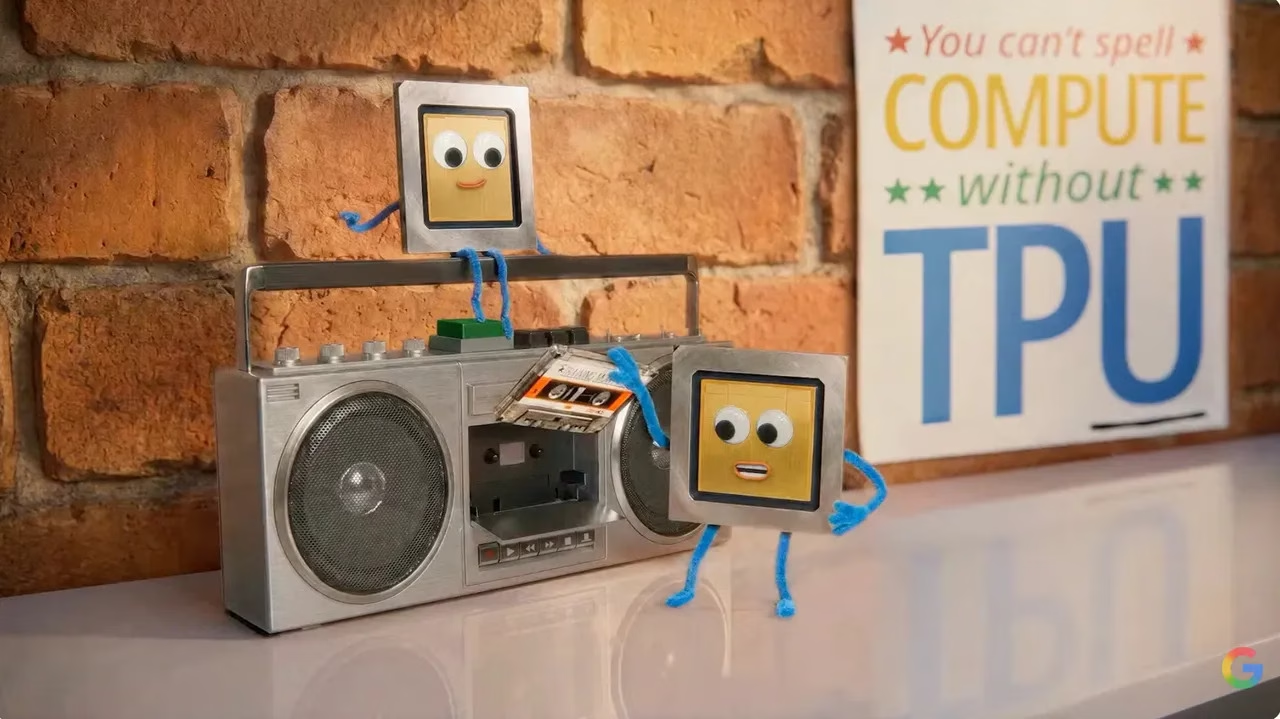
This approach is clearly demonstrated in Google’s “TPU Training Day for I/O ’26”, created in collaboration with Nexus Studios and director Laurie Rowan.
At the center of the story are TPUs presented as small characters preparing for Google I/O.
Google describes the production as a combination of old-school puppetry, traditional animation, Gemini Omni, and experimental video tools.
yt_iframe
Visually, the video maintains a strong handmade aesthetic. Cardboard, markers, puppets, and physical sets remain essential parts of the style. Digital tools are used together with traditional techniques rather than replacing them.
What is interesting here from a 3D perspective:
3D works together with physical animation.
Digital elements can be combined with real puppets and physical environments.
AI becomes another tool within the production pipeline.
The handmade aesthetic remains part of the final visual style, preventing the result from becoming a sterile digital image.
What is especially interesting is that the team started with the simplest possible materials: cardboard and markers.
The team then used AI to transform these simple materials while preserving their handmade character.
This project demonstrates an important shift in modern production: 3D does not always need to be the main visual style.
Instead, it can become one of many tools within a broader production pipeline, working together with physical animation and traditional techniques.
Conclusion
What do Gecko, a lollipop, VR glasses, and TPUs have in common?
At first glance, almost nothing. But all four examples show the same idea: 3D today is not about using 3D for the sake of 3D.
It allows brands to create things that would be difficult or impossible to achieve with a traditional camera: sending a character underwater, transforming a lollipop into an engineering structure, showing future product experiences, or combining digital animation with physical materials and AI.
Modern 3D animation can be realistic, stylized, unusual, physical, or almost invisible. Its value is not defined by the amount of CGI on screen, but by what it allows creators and brands to show.
The future of 3D is not about replacing traditional production or human creativity. It is about combining 3D, AI, physical animation, and storytelling to bring impossible ideas to life.
The most interesting projects of 2026 prove one thing: technology becomes invisible when it serves the story.