Contents
Why animation style matters in visual storytelling Traditional 2D Animation 3D Animation for Modern Brands Motion Graphics and Kinetic Typography Stop Motion Techniques Rotoscoping and Experimental Styles Cutout and Collage Animation Whiteboard and Scribing Animation Hybrid Animated Styles Choosing the Right Style for Your Video Darvideo Approach to Animated Styles Final Thoughts on Visual Identity through Animation FAQ14 min read
Sometimes you look at a brand and it grabs your attention even before the logo shows up. That is rarely just luck. It is the power of a unique animation style. That style decides if a video stays just another clip or turns into a story your client wants to watch again.
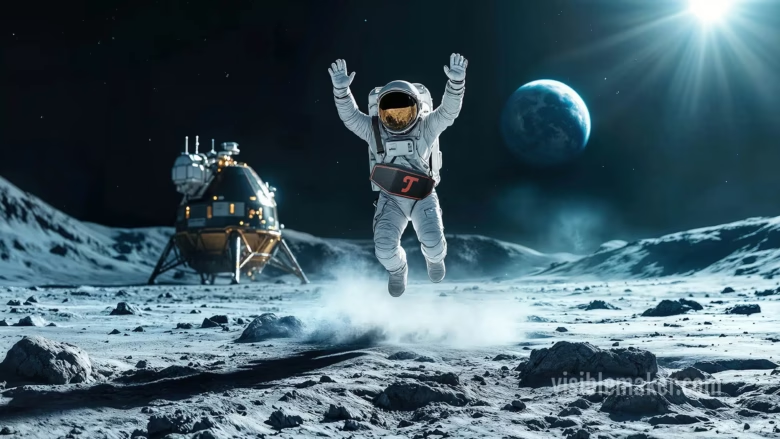
From classic 2D animation to more realistic 3D animation, each approach has its own character, technical difficulty and emotional tone.
 .Image source: Freepik
Understanding the different types of animation helps not only with picking the right style, but also with building a consistent visual identity for the brand.
Why animation style matters in visual storytelling
Interesting fact! In marketing for brands in 2025, a big trend is becoming critical: content that lasts *up to 10 seconds* with animation or motion graphics gets far more attention than longer videos. That forces brands to adapt their style and format.
Well, that makes sense. With digital tools growing and giving endless ways to bring any idea to life, it is really hard (sometimes impossible) to hook a viewer. So if you do not grab them in the first few seconds, you can be sure you have lost them.
The chosen style affects how people see the brand, just like its logo, colour palette and loads of other details.
Traditional 2D Animation
You can talk about 2D animation as a classic that will never go out of fashion. The process is based on drawing frame by frame. Every movement is drawn by hand or created in programs like Toon Boom Harmony or Adobe Animate.
Instead of disappearing, 2D animation has become a key tool for telling stories in branding, education, marketing and entertainment.
Interesting fact! Even though 3D rules the roost, 2D is coming back in big projects. For example, Wylde Pak from Nickelodeon is a series made in 2D technique. Also The Day the Earth Blew Up: A Looney Tunes Movie from Warner Bros. Animation is a full-length film done in 2D format.
yt_iframe
3D Animation for Modern Brands
“The art challenges the technology, and the technology inspires the art.” – John Lasseter (Pixar, USA)
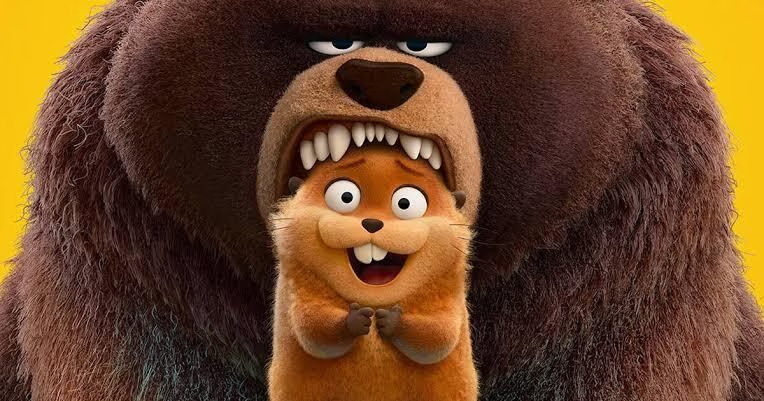
3D animation gets used to create moving images in a three-dimensional space. It is a graphic technique that uses movement to bring characters or objects to life.
Why brands choose 3D animation:
Realistic depth and lighting that make visual storytelling better.
Complete freedom with camera angles and movement.
Perfect for showing complex devices, processes or buildings.
Gives a fancy look that helps how people see the brand.
Depth gives 3D a more realistic look when you compare it to other kinds of animation. A three-dimensional model exists in space. You can rotate it, light it, change the camera.
At Darvideo Animation Studio we see 3D not just as a technique, but as a way to think in volume. For example, when we make videos for tech companies, 3D animation lets us show the inner structure of a device or a complex process even without real filming.
yt_iframe
Such different animation styles need more resources, but the result looks premium. Smooth movements, realistic textures, camera effects. To make it clear, it is like the difference between a good illustration and a film.
Interesting fact! The 3D animation market (as a segment of the whole market) in 2024 already takes *over 44 percent* of the global animation share by revenue.
Motion Graphics and Kinetic Typography
Bass, Saul. “Design Is Thinking Made Visual.” – Graphic Design: USA No. 4 (1969), United States Information Agency.
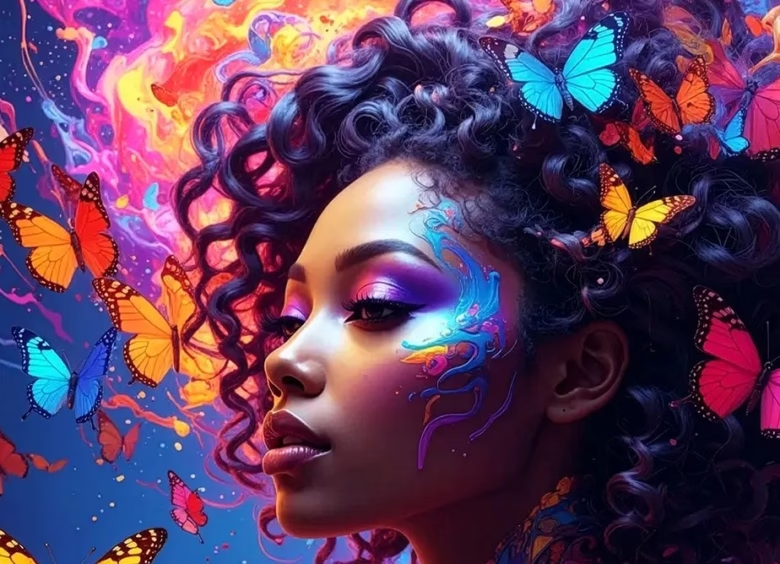
Motion graphics is minimalism in movement. It is animated graphics, meaning a mix of design and motion, where the main focus stays not on characters, but on shape, text, colour, rhythm and composition.
Netflix uses motion graphics a lot in its brand animation. For example, in the famous logo intro “N”, made by the studio Imaginary Forces. This shows how brands use moving graphics to build a recognisable visual style.
Animated styles based on motion graphics create logic out of chaos. They bring infographics, texts, icons to life, making them part of the story.
yt_iframe
When our animation studio develops corporate videos or social campaigns, we often use kinetic typography. That is text movement synced with the rhythm of sound. It is not just a style, but a chance to turn every word into a gesture for a specific idea.
Where motion graphics work best:
Brand logo animations and intros.
Explainer videos and digital ads.
Educational videos with infographics.
Social media content with kinetic typography.
Stop Motion Techniques
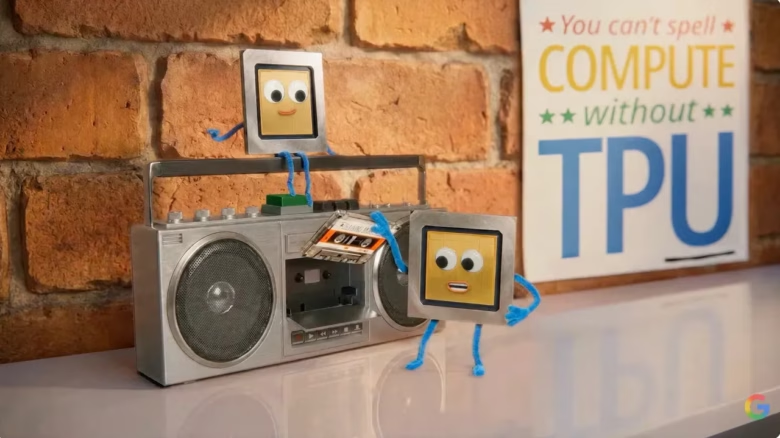
The animation techniques mentioned earlier definitely have their advantages. But thanks to big differences, stop motion confidently competes even with 3D animation.
To explain it simply and quickly, this technique is based on photographing an object, where each next photo is taken with tiny changes. Such tweaks create the effect of movement, and in the end you get animation.
Everything here happens literally frame-by-frame. Figures made from plasticine, paper or wood move under the camera. The movements fill everyday objects with life.
Common materials used in stop motion:
- Clay or plasticine (for flexible character animation).
- Paper and cardboard (for cutout-style projects).
- Wood, fabric, metal or even sand (for artistic or experimental works).
Interesting fact! In stop-motion production there is a record. For example, the short film Gulp (2011) from Aardman Animations studio was made on a beach, with sand and a phone camera. It was the biggest outdoor stop-motion animation at that time.
yt_iframe
Rotoscoping and Experimental Styles
Rotoscoping lets animators create realistic animation and visual effects. It is a technique where an artist traces the movements of a live actor frame-by-frame. Thanks to rotoscoping you can bring the boldest experiments to life.
At Darvideo we sometimes use different animation styles where rotoscoping mixes with digital effects. This combination creates a feeling of a moving dream, when images are alive but not real. If you are looking for an unusual visual language, this style is perfect.
Cutout and Collage Animation
The cutout technique is based on the art of paper cutting. The needed figures were made by hand and gradually moved in the frame to create the required effect. It is one of the different animation styles that have kept their popularity in the digital age.
It is clear that this process takes quite a lot of time. But you can make something special and authentic.
 .Example of cutout and collage animation technique (educational use)
Whiteboard and Scribing Animation
Whiteboard Animation is drawing a picture with a marker on a white background. This type of video can be used for marketing purposes, advertising and teaching. It is important to present your information in the video evenly, without overloading the viewer. Idea by idea, thought by thought.
The animation style interests the viewer because you can sort of watch the creation process in real time. After all, the picture appears right before your eyes. To create an effective video, you need to prepare a clear technical task. And that is an important part of the work.
Example of whiteboard animation style (educational use)
Hybrid Animated Styles
Hybrid animation is mixing different animation techniques in one video. From each type you can take what you think is best and fit it all into one project. It is an interesting option if you cannot decide what exactly will suit your story.
It is quite common in big projects. For example Spider-Man: Across the Spider-Verse (2023). In the film they used six different types of animation.
 .Source: IMDb
Choosing the Right Style for Your Video
Let us compare different types of animation:
| Animation Style | Production Complexity | Best Suited For | Approximate Cost per Minute | Notes |
|---|---|---|---|---|
| 2D Animation | Medium | Educational videos, storytelling | $1,100 – $7,000 | The price depends on the number of scenes, characters and the length of the video. It is the most affordable option among professional animation styles. |
| 3D Animation | High | Product and technology videos | $3,000 – $10,000+ | The most expensive style due to complex 3D modelling and rendering. |
| Motion Graphics | Low to medium | Corporate and digital campaigns | $500 – $3,000 | The cost depends on the animation speed and the use of graphic effects. |
| Stop Motion | High | Art campaigns and brands with a crafted aesthetic | $5,000 – $20,000+ | Requires physical sets and frame-by-frame shooting, which increases the budget. The final price is set individually after reviewing the script. |
| Hybrid Animated Styles | Variable | Brand videos and unique visual solutions | $4,000 – $12,000+ | Combines 2D, 3D and live-action. The final cost depends on the ratio of techniques used and the total video length. |
Note: the prices given are approximate average market figures as of 2025.
Darvideo Approach to Animated Styles
For Darvideo every project is individual, you can be sure. It is an experiment with form, rhythm and feeling. We do not just copy different animation styles. We create our own versions.
Darvideo is a studio with over 10 years of experience that has completed hundreds of projects for clients from the USA, Europe and Asia. We make animated videos that mix a strategic approach and artistic expression.
Final Thoughts on Visual Identity through Animation
Animation gives your idea a chance to come alive and start moving. An animated video will make an interesting and gripping story for viewers. The main thing is to pick the right type of animated video, based on many factors.
At Darvideo every animation style is not just a type of animation, but a chance to show your brand in a new way. Trust the professionals. This will let you avoid extra hassle and get a real result.
FAQ
What are the most popular animation styles today?
The most popular today are 2D animation, 3D animation and motion graphics.
How do 2D and 3D animation differ in production and cost?
2D animation is created by hand or digitally frame by frame, while 3D animation is based on spatial modelling. Producing 3D usually costs 2-3 times more because of long rendering and complex modelling.
Which animation styles work best for explainer videos?
The best ones are motion graphics, whiteboard animation and light 2D formats.
How to choose the right animated style for my brand?
Consider the character of the brand and the audience. If it is hard to choose, contact us for help.
What software is used for different animation styles?
For 2D animation they most often use Toon Boom Harmony, Adobe Animate or TVPaint. For 3D animation – Blender, Autodesk Maya, Cinema 4D. For motion graphics – Adobe After Effects.